

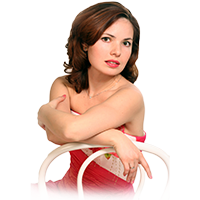
«Russian Slovo» December 2016 "Czech music touches"
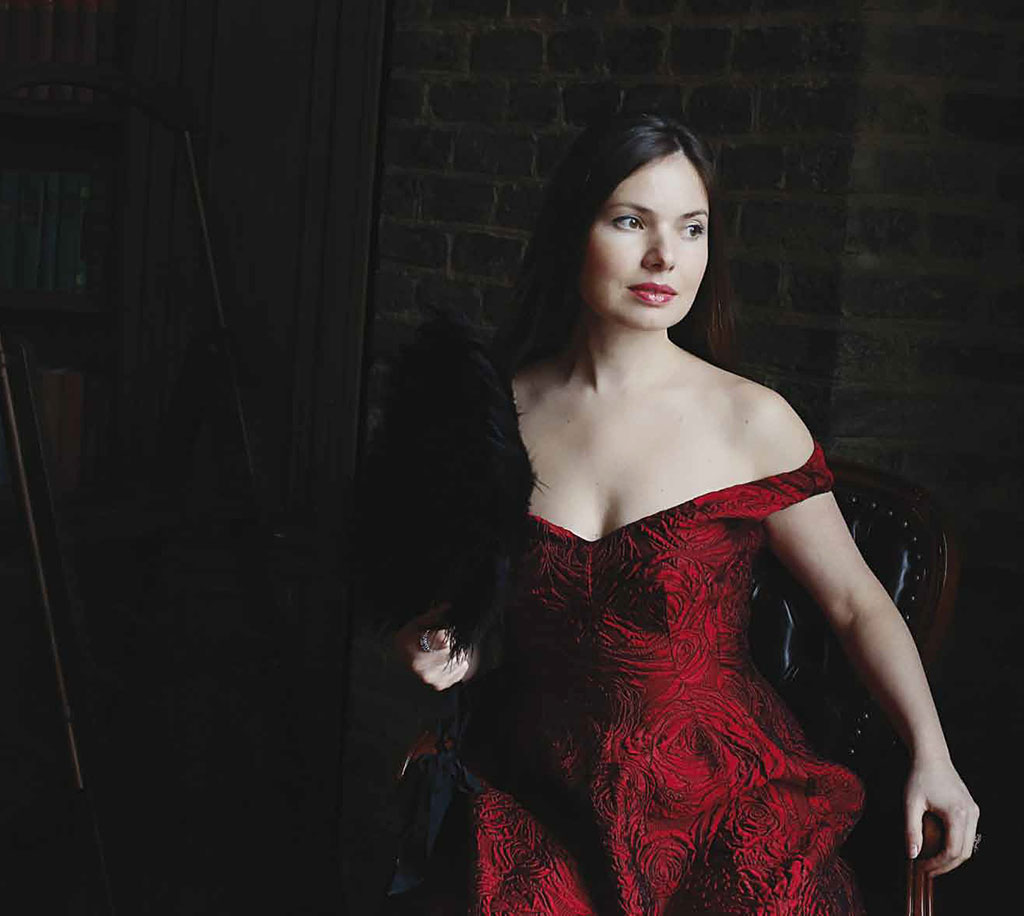
The main Prague music event of December is the festival Czech music touches (České doteky hudby). One of the festival media-partners, the Russian word magazine has already interviewed festival superintendent Miroslav Matějka in October and now our correspondent Stanislava Ozerova has met the two participants of this year program: soprano Ekaterina Monisova and violinist Pavel Šporcl.
Gifted opera singer Ekaterina Monisova will again present the Russian music school achievements. After graduating from the conservatory as a conductor of the academic choir Ekaterina decided to change her direction and take up opera singing. Since then she performed in many recitals in Russia, Czech Republic, Italy, Portugal, USA etc.
The second our companion is the famous Czech violinist of a worldwide reputation Pavel Shporzl, who has participated in many festivals and performed with the best orchestras worldwide – Tokyo Symphony, National Orchestra of France, Royal Liverpool Symphony and others. He will take part in the Christmas concert Russian musical treasures.
Corr.: Let us start from the background. How did it happen that you decided to connect your life with music?
Pavel Šporcl: I've been playing since I was five and sang a lot from early age also. Parents realized my predisposition to music and my musical ear, so they decided to give me study the violin. I'm very happy that they did exactly that, because I just fell in love with the violin. I often use to say that the violin is the main mistress of my whole life.
Ekaterina Monisova: I was a creative child fond of ballet and painting, dreaming of becoming an actress. At the age of six I was brought to music school to a piano class. I liked to perform wherever I could, in any public places I’ve visited with my parents, and was absolutely not shy. After the conductor's faculty of the conservatory I felt myself as a musician and not a singer. The voice really opened up later when I began to perform with the orchestra. My teachers and mentors help me to realize that my voice is a special gift. Their phrases like “You were born to sing” finally convinced me that this is my vocation.
Corr.: Pavel, you have perform at many festivals throughout Czech Republic. What is the difference of Czech music touches from the rest festivals in your opinion?
PŠ: I believe that Czech music touches is a truly unique festival not only thanks to its program, but also the time when it is held. There is no other similar festival in Prague in winter during the Christmas and New Year holidays. All concerts are held exclusively in the Prague central area and this fact makes the festival one of a kind. This year I'm in a special anticipation so far as I have to take part in two festival events at once. Besides the closing gala we’ll perform with an interesting project together with my gypsy band and Civitas Ensemble two days earlier. This recital will be a kind of synthesis of classical and gypsy music.
Corr.: Ekaterina, you’ll perform at the festival not for the first time. Tell us please about your last year's impressions.
EM: Would like to note the high level of the festival, luxurious halls and all participants are brilliant musicians. Last year my partners were the young Czech virtuosic violinists Jan Mráček and Miroslav Ambroš. But I was the only Russian performer at the festival. In general, Russian singers are famous for their rich voice nature and school all over the world. Hope my present performance in the Bedřich Smetana Hall of the Municipal House which is appear to be one of the most beautiful halls of Europe will be successful and I’ll represent Russia worthily.
Corr.: You’ve performed with the South Bohemian Philharmonic Orchestra and the conductor Leoš Svárovský last year in Prague. What were your impressions of cooperation with Czech colleagues? Have you noticed some differences in the approach to the work or maybe to rehearsals?
EM: Yes, I was happy to perform with maestro Svárovský. He is a first-class conductor, a master and very experienced musician so we didn’t even need to rehearse. Despite the fact the repertoire was quite complex it was enough for us to run through before the concert without stopping. I’ve performed some difficult arias such as Cleopatra from Handel's Giulio Cesare, Gavotte from Manon by Massenet and the Waltz of Juliet from the Romeo and Juliet by Gounod. The orchestra was perfectly prepared, the conductor watched my every breath, the Prague audience warmly welcomed us, so we succeeded!
Corr.: Few words on this year's program. Pavel, your forthcoming concert "Russian musical treasures" will unite, it would seem, incompatible – Tchaikovsky with Schnittke. Which one is closest to you?
PŠ: Tchaikovsky is a classic of course but I love Schnittke and all his compositions from the festival repertoire no less. These composers are difficult to compare. They lived in different days, they were occupied by different problems but both of them are outstanding musicians.
Corr.: Ekaterina, you’ll perform at Mozart Gala now. How was this program prepared? Were you asked to sing Mozart right away?
E.M: All music lovers and musicians around the world celebrate two dates this year: 260th anniversary of the Mozart birth and 225 years since his death. Of course, I could not refuse the offer to perform Mozart in Prague, the city where his famous opera premieres were held. When I was preparing for the festival I’ve presented a solo program "Mozart!" with the chamber orchestra Musica Viva in the hall of the Moscow Conservatory recently, where I sang famous arias of Donna Anna from Don Giovanni and the Countess from Le Nozze di Figaro and some Mozart's spiritual works also.
Corr.: Tell us please of your favorite music. What classical composers influenced you above all?
PŠ: Being Czech I consider it is my sacred duty to perform the works of our Czech composers. There are all the works of Antonín Dvořák, much of the work of Bohuslav Martinů, Leoš Janáček, Bedřich Smetana in my repertoire. One of my tasks is to preserve the musical heritage of the famous Czech violinists of the past – Ian Kubelik, Jaroslav Kocian, František Drdla, František Ondříček – in the Czech Republic and abroad. These violinists have written many compositions themselves, which I often perform.
EM: I have enough favorite composers from Purcell and Bach to Rachmaninov and Schnittke. I like to play fugues of Bach and nocturnes by Chopin on the piano since my childhood. My today’s program includes the most diverse music from baroque to jazz. And yes, you have to fall in love with composers whose music you use to perform. Now I'm in love with Mozart! Mozart's music helps you to find peace of mind and harmony.
Corr.: What do you think of the Russian musical tradition?
PŠ: Russian musical tradition is grandiose undoubtedly and I like many Russian composers. Tchaikovsky's violin concert is one of my most frequently performed works. We even made a video of this performance together with Czech Philharmonic. Exactly this work I’ll perform at the closing evening gala of Czech music touches.
EM: One of my favorite musical genres is a folk song. Russian composers, for example, Glinka, the founder of Russian classical tradition often addressed to the folklore in their works. One of the greatest composers ever in the history was Pyotr Ilyich Tchaikovsky. The names of the famous opera bass Feodor Chaliapin, the dancer Anna Pavlova were widely known both in Russia and abroad and directly influenced the international culture process. The popularity of Russian opera has increased in the world lately. Russian music is very deep and humane. I dream of presenting to the Western audience a chamber program of songs by Alyabyev, Glinka, Rachmaninov and Sviridov. And as for the opera I would be happy to sing Tatiana's part in Tchaikovsky's Eugene Onegin.
Corr.: Do you follow the modern music? What do you like to listen to?
PŠ: Of course, follow and listen. I still consider myself a modern person, but classics is nicer to my heart. It seems to me that this kind of music is able to better convey and express our emotions.
EM: It has become possible in the modern Internet world to listen to rare records of masters of vocal art of the past and comparing them to learn something, to choose what suits you. When I learn new compositions music always sounds in my head. This work with our “inner ear” which the musicians develop in themselves. Of course, I don’t always listen to classics, I like to dance under modern hits, I fond of Latin American music and listen to jazz and to blues. I’ve presented jazz programs to the Moscow public last year along with saxophonists and a jazz band at the Moscow Variety Theater, the House of Music and the Conservatory. I have students who love pop. I tell them: when you learn to sing classics you can sing everything.
Interview: Stanislava Ozerova
Foto: Viktor Goryachev, 2016; Lenka Hatašová, 2015

